

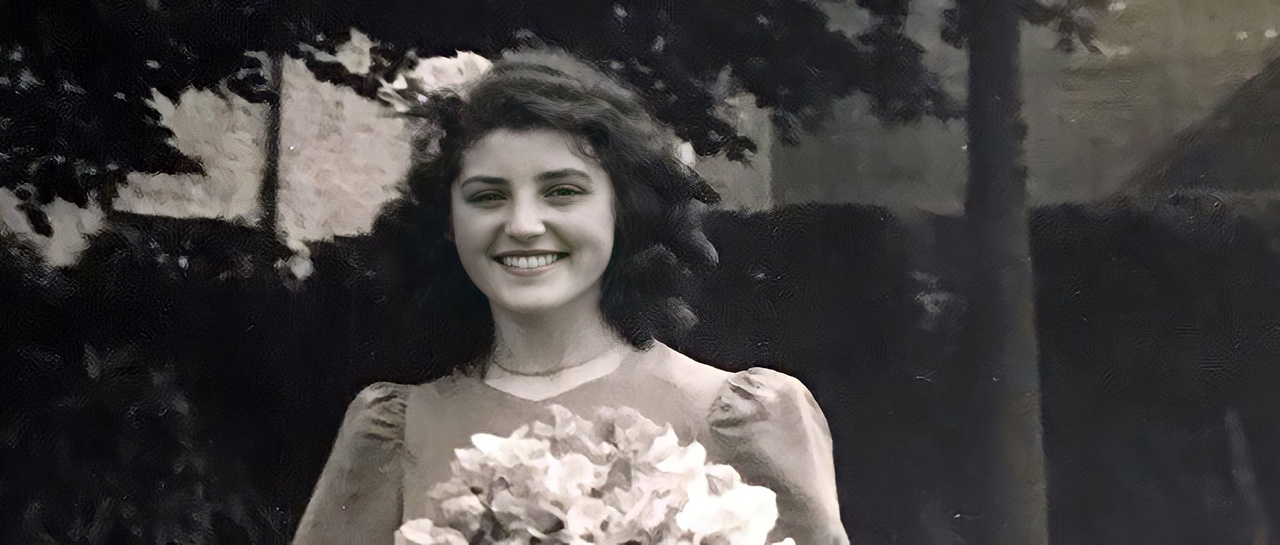
Ancient Roman Festival of Parentalia
This was an 8 day private festival in remembrance of deceased members of the family. During this time all the temples remained closed and no one was allowed to marry because it was believed to bring bad luck to the couple. All torture and executions were also stopped. Originally the festival was 11 days but was later reduced to 9. It was believed that if honour and respect were not given to the spirits of the ancestors then they would be insulted and would come back and haunt the living with misfortune.
The ritual of Parentalia began at the 6th hour on 13th February with a general invocation known as Parentatia conducted at the tomb of Tarpia who was an ancient vestal virgin. This however seems to have been the only public part of this festival. The remainder being private mourning of a families ancestors. Families would visit cemeteries lay flowers and even have picnics with their loved ones, leaving offerings of bread, water milk, wine, honey olive oil and violets. Occasionally animal sacrifices took place but these were very rare.
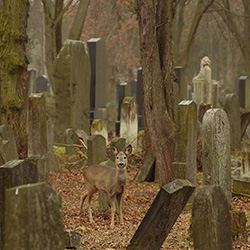 Roman cemeteries were always placed outside the city limits because the Romans believed that the dead could contaminate the living not only spiritually but physically. There are obvious health reasons for this so the world of the dead had to be physically separated from the living. This is reminiscent of Egyptian beliefs where the towns and villages were built in the east where the sun came up giving life and the burial grounds to the west where the sun set on life.
During these nine days of mourning there was also the festival of Lupercalia held on the 15th of February which is believed to be the origin of modern St. Valentines Day, see here and the festival ended on 21st February with the Festival of Feralia which was a remembrance of all those who had died, related or not. This is the current equivalent of All Souls Day which is nowadays celebrated by the Christian church on 1st November.
In fact, Feralia and All Souls Day are directly connected with each other. In the year 609 AD, Pope Boniface IV decreed that February 21 would be known as “All Saints Day”, a general holiday dedicated to all Catholic saints who did not have a specific saint’s day of their own. Later that year, Boniface ordered that the date for All Saints Day would be changed from February 21 to May 13, which was the last day of another ancient Roman festival period dedicated to the spirits known as the Lemuria. Afterwards Pope Gregory III changed the day once again to November 1, and it has remained that way ever since.
The Festival of Lemuria which takes place on the 9th of May involves a ritual by the Master (or Mistress) of the House with nine black beans(!) to honour the Lemures – spirits of those who died unnatural or violent deaths. I wondered if it was connected also to the ancient land of Lemuria and a possible belief by the Romans that the land may have been destroyed violently (legend says that, like Atlantis, a disaster such as volcanic eruption or flood caused its destruction).
The Chinese Festival of Hungry Ghost
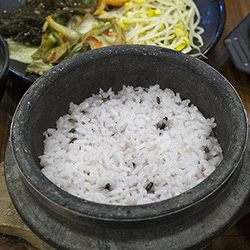 is held on the 15th day in the 7th month of the lunar calendar but the whole of the 7th lunar month is commonly known as The Ghost Month. This was originally a Daoist festival which is a popular folk religion in China. The 7th month of the Lunar Calendar has been believed to be the scariest month of the year for thousands of years. The belief is that Ghosts are let out of Hell for this month to roam the earth. Believers avoid being alone at night lest an enemy ghost comes after them.
Special ceremonies are performed to avoid annoying the Ghosts such as putting photographs and paintings of ancestors on display, burning incense. The main ceremony is usually held at dusk when plates of food are offered to the ancestors because it is believed they are bound to be hungry after roaming the earth for two weeks. It is also believed the Ghosts of their ancestors will bless or punish them depending upon their behaviour that year. By offering the food they are hoping to be blessed.
Obon the Japanese Buddhist festival
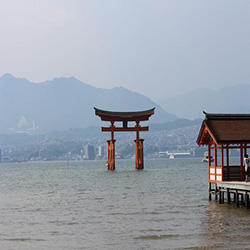 This Buddhist-Confucian custom has evolved into a family reunion holiday when people return to their ancestral home and visit their ancestors' graves. It is also believed that on this day the spirits of ancestors revisit the household altars. The three days of Obon are 13th to the 15th day of the 7th month of the year. If using a solar calendar this equates to July. However, according to the lunar calendar the 7th month co-insides with August. Obon is usually observed in mid August but I have seen some references to it being in September as well. This tradition stated over 500 years ago and traditionally includes a dance, known as Bon-Odori. Although it is not an official public holiday in Japan most people do have a at least one day off. It is celebrated through the lighting of bonfires, sacred meals, paper lanterns and dancing.
Obon,” from Sanskrit’s “Ullambana,” suggests great suffering, as the full term translates into “hanging upside down.” Bon-Odori—and the Buddhist legend stems from the time of Gautama Buddha who he instructed his disciple Maudgalyayana on how to release his mother from suffering in the realm of the Hungary Ghosts by making offerings to Buddhist months on the 15th day of the seventh month ensuring his mother’s salvation.
Buddhists believe the gates of hell are opened during this month, and family members give offerings and prayers of thanks and appreciation of the worldly suffering they endured on their behalf. On the 14th day, a grand feast is organized for the ghosts and to ward off evil spirits. Nowadays some East Asian countries celebrate with live performances for the entire community. Interestingly the first few rows are left empty to seat the ghosts. Priests and monks perform rituals by throwing rice and other small foods into a fire which open the gates of heaven and liberate the spirits.
A primary purpose of Obon is to ease the suffering of deceased loved ones while expressing joy for the sacrifices loved ones have made. Thank you https://www.readthespirit.com/religious-holidays-festivals/ullambana-and-obon-buddhists-japanese-celebrate-summer-festival/
Chuseok
Is celebrated in both North and South Korea beginning on the 14thday of the 8th lunar month and means literally ‘autumn evening’ – is a multi-faith festival with a strong tradition of honouring ancestors. Rites include tending graves, offering of meats, rice and the deceases favourite beverages. This rite is known as “Charyeis”. This custom is not just for the recently deceased but go it is believed the ghosts of four generations hover over the living and therefore memorial stones must stand for at least that time. People also undertake rites on the anniversaries of family members deaths.
All Soul’s Day
Follows All Saints day which itself follows All Hallows Eve, (Halloween), and tends to eclipsulate All Souls day which commemorates all those who have died this year. Today Christian churches of all denominations will hold a service for the dead on the 1st or 2nd November each year.
Día de los Muertos
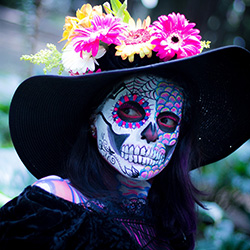 Is widely celebrated in Mexico on 2nd November and mingles modern day Catholic influences with traditional Mesoamerican beliefs. T Whereas Halloween is a dark night of terror and mischief, Day of the Dead festivities unfold over two days in an explosion of color and life-affirming joy. The point of the festivities is to demonstrate love and respect for deceased family members. In towns and cities throughout Mexico, revelers don funky makeup and costumes, hold parades and parties, sing and dance, and make offerings to lost loved ones.