

This article is about the December solstice and how it has been celebrated around the world through the ages. In the northern Hemisphere this is the Winter Solstice and in the Southern Hemisphere it is the Summer Solstice. This year it also co-insides with a rare planetary conjunction which is the subject of another article.
Winter solstice celebrations around the world
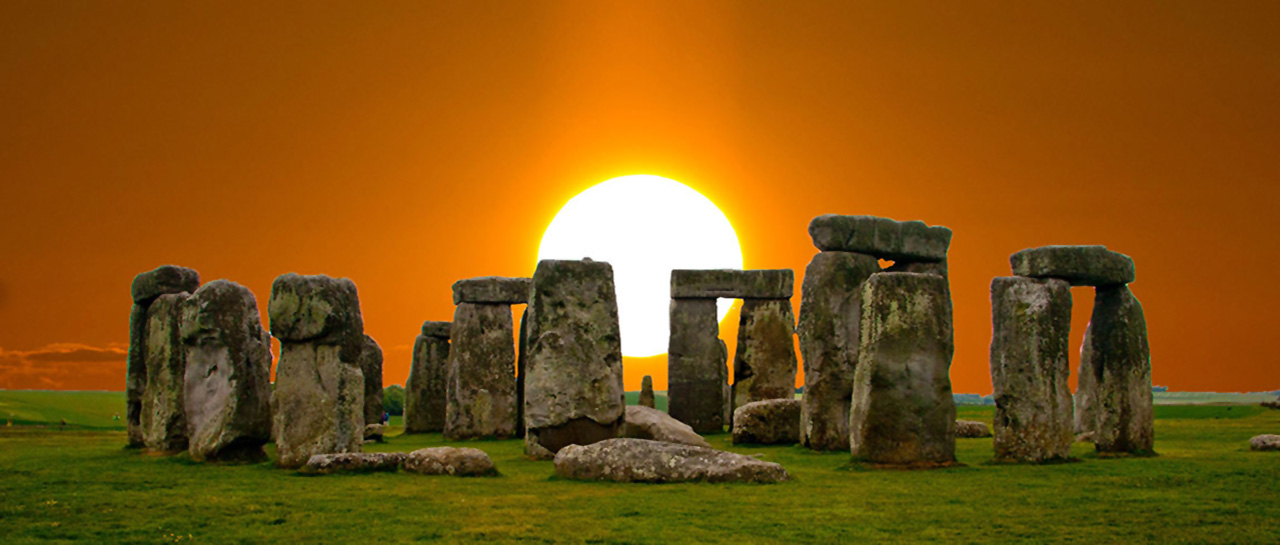
The winter solstice has been celebrated by different cultures all over the world since Neolithic times 12,000 years ago. Neolithic monuments such as Newgrange in Ireland and Maeshowe in Scotland which are aligned with sunrise on the winter solstice as well as Stonehenge in England, which is aligned with the solstice sunset, have been where people have held rituals, usually to welcome back the sun, on this the shortest day of the year in the northern hemisphere.
The Inca empire celebration known Inti Raymi (Quechua for Sun Festival) in Peru, which takes place on their winter solstice on 21st June. The three day Inca festival ended on the solstice when they bowed down before the dawn and offered cups of sacred bear to the rising sun and the Inca used a mirror to focus the sun’s rays to light the sacred fire before sacrificing animals for the feast. This practice still goes on today without the sacrifice of course.
St Lucia’s Day (one of the first Christian martyrs) is another traditional festival of lights held in Scandianvia. Celebrated with the lighting of fires to scare away evil spirits during the longest night of the year.
The Chinese welcome the return of the sun and the longer days with a celebration called Dong Zhi and the increasing energy in the coming year. Now it is a time for families to get together and celebrate the past year whilst sharing good wishes for the year to come.
In Japan it is celebrated with as a time of renewal and a time for celebrating farmers who will grow the crops for the following year. Large bonfires are lite on the sacred mountain of Mount Fuji and many people bath in hot springs.
Around this time was the festival of Juvenalia which was a feast to honour the children of Rome.
On 25th December they celebrated the birthday of Mithra, the ancient Persian god of light and his triumph over darkness. To some it was the most important day of the year and Mithra belended with Sol Invictus, who was entitled the God of the Unconquered Sun). It is probably why this date was chosen by Emperor Constantine to be the Birthday of Christ.
Many indigenous peoples around the world still celebrate the return of the sun in their own tribal ways. The Hopi in Arizona, the Zuni of New Mexico as well as many other tribes around the world.
It is also the beginning of the pagan 12 day celebration of Yule, which celebrates the return of the sun the forerunner of the 12 days of Christmas. Yule was the traditional North European pagan name for the winter solstice festival which lasted 12 days and was celebrated the return of the sun with the exchange of gifts, bonfires in the fields, and crops and trees were honnoured, known as "wassailed", with toasts of spiced cider and beer.. Many of the traditions now associated with Christmas had their roots in Pagan Winter Solstice celebrations; including mistletoe and Christmas trees. It was also when the traditional Yule Log was cut and brought into the hearth.
Origially a Yule Log as a whole tree which was chosen with special care and brought into the house where it was kept burning for the whole 12 days. If there was any left it was kept to, relight tree the following year. In different parts of the country different trees were traditionally used, such as Oak in England, Birch in Scotland and Cherry in France and this is obviously where the tradition of the Christmas Tree began.
In England Christmas Trees first became popular in Victorian times as it was a German tradition that Prince Albert brought with him. Before that the British had a Yule Log, although by then it was not a whole tree.
The Druids - an ancient Celtic order of priests, teachers, diviners and magicians who gleaned knowledge and enlightenment from sacred landscapes and ancient trees such as ‘Tutorial Oaks’ - used evergreen trees, holly and mistletoe to represent everlasting life. Druids would consider the cutting of trees as an offence against nature, but would decorate them with colourful rags tied on the branches. A custom still carried out by Druids during the solstice celebrations at Stonehenge and Avebury.
The ancient Romans held the festival of Saturnalia in the week leading up to the solstice in honour of Saturn, the god of agriculture. This was when the slaves became masters for a while and everything was closed so everyone could join the fun. This is probably the root of the old English Feudal custom where the family waited on the servants for the Christmas Eve party
This year’s solstice occurs at 10.02UTC.
Sources
https://www.rmg.co.uk/discover/explore/when-winter-solstice
https://theconversation.com/what-winter-solstice-rituals-tell-us-about-indigenous-people-108327
https://www.history.com/topics/natural-disasters-and-environment/winter-solstice