

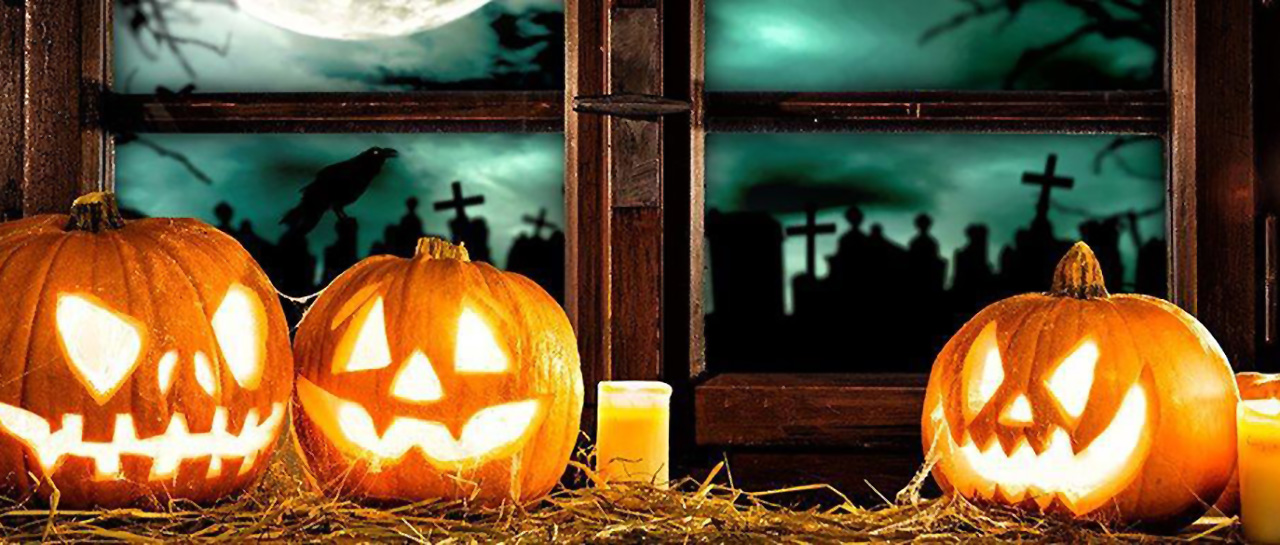
Halloween, 31 October traditionally marks the end of the harvest and the beginning of the Celtic and Pagan New Year Known as Samhain which in Irish-Gaelic means 'the Summer's end', and is pronounced 'sow-in'. Samhain represents the death of the summer sun god, Lugh. This festival celebrates Nature's cycle of death and renewal. This is also traditionally known as Halloween and is reputed to be the night when the veil between us and hte spirit world is at is thinest and the spirits of our ancestors may roam.
Samhain begins at sundown this evening and ends sundown tomorrow 1st November. It is believed to have Celtic pagan origins but there is evidence it has been an important date since Neolithic times. The Mound of the Hostages, a Neolithic passage tomb at the Hill of Tara, in Ireland is aligned with the Samhain sunrise.
The Celts, who lived 2,000 years ago in what is now Ireland, Great Britain and northern France, celebrated new year on November 1. This marked the end of the harvest and the summer and the beginning of winter, which was often associated with death and renewal. A time of year when the land was left fallow.
The Celts believed that on the night before the new year, the veil between the worlds of the living and the dead thinned and that ghosts could returned to earth causing trouble and damaging crops if they wanted to. The Celts also thought that whilst the veil was thinner it would make it easier for the priests, to predict the future.
Large bonfires were built where the people gathered to make offerings of crops and animals to the Celtic gods. During the festival, they dressed up often in animal heads and skins, and told each other’s fortunes. When the celebration was over, they re-lit their own individual hearth fire, from the sacred bonfire to help protect them during the winter months.
By 43 A.D., the whole region was ruled by the Roman Empire and It is thought that two Roman festivals became incorporated with Samhain - 'Feralia', when the Romans commemorated the passing of the dead, and 'Pomona', when the Roman goddess of fruit and trees was honoured. The Halloween tradition of bobbing for apples is thought to derive from the ancient links with the Roman fruit goddess, Pomona, and a Druidical rite associated with water. In the Northern Hemisphere, Samhain heralds the beginning of Winter when the world starts to darken and the days are getting shorter; the 'dark half' of the year and the demise of the sun's uplifting influence. The crone, personified as Cailleach - the Queen of the Winter - was reborn on every All Hallows Eve, returning to bring the Winter and protect animals through the coldest months. She turned to stone on Beltane Eve, Beltane being 1st May. they incorporated the Roman festival of Feralia commemorating the dead, celebrated at the end October and Pomona the Goddess of fruit and trees, Her symbol is the apple which probably explains the traditional game of “bobbing” for apples which is often part of modern celebrations.
In 609AD the Catholic church introduced a day to honour all Christian martyrs which Pope Gregory III moved to 1st November at some point between 731-74. This was later changed 2nd November and is now called it All Souls Day. This was also celebrated with big bonfires and dressing up in costumes as saints, angels and devils. The all Saints Day celebration was also called All-hallows and the day before was referred to as All-hallows Eve which was the traditional night of Samhain. Of course it has now become known as Halloween.
For how Halloween got to America and the introduction of pumpkins see here: http://www.history.com/topics/halloween/history-of-halloween
I also hate to see waste and with all the pumpkins being turned into lanterns here are some links to some recipes so use up all that pumpkin.
A traditional Pumpkin Pie
http://allrecipes.co.uk/recipe/4600/homemade-pumpkin-pie.aspx
And Pumpkin Soup ready and waiting for Guy Fawkes night and all those other cold winter nights. http://allrecipes.co.uk/recipes/tag-2000/pumpkin-soup-recipes.aspx?o_is=Search&o_s_trm=pumpkin+soup