

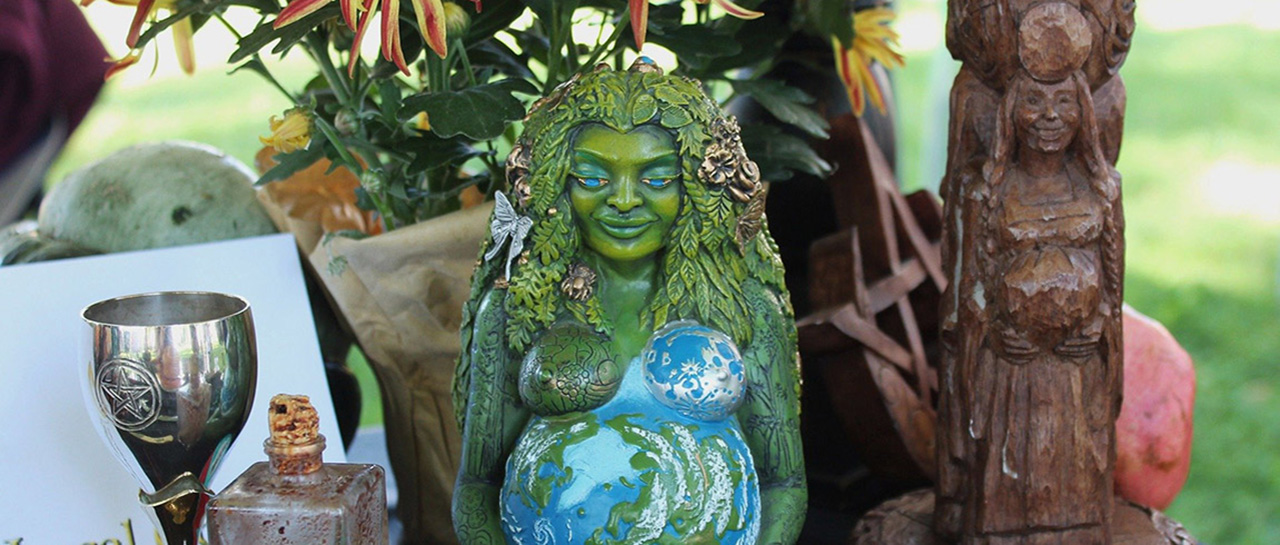
4th April is the Roman Festival of Magna Mater. This is the festival of Phrygian Great Earth Mother Cybele. In Roman times her priests would don female clothes and identities to commemorate her son Attis, who was castrated and died of his wounds but was later resurrected.
Cybele the Mother Goddess was originally an Anatolian goddess, known as the mother of the mountains and possibly the forerunner of the earliest Neolithic goddess, depicted as a statue of a pregnant seated goddess was found in a granary at Catalhoyuk. She is Phrygia;s only know goddess. It is also believe she was the mediator between the boundaries of the known and unknown, as well as protector of those who travelled between the two.
Cybele in Greece
Her cult was adopted and adapted by the Greeks, where she met a mixed reception. Her Minoan equivalent was Rhea but she was also partially assimilated within the Earth-goddess Gaia, and the Harvest-Mother goddess Demeter. She became the protector of the city of Athens, but she was mostly seen as a foreign exotic goddess of mystery, who arrived in a chariot drawn by two lions and accompanied by wild music, wine, and disorderly ecstatic conduct. This image of her goes back to her original origins as a Phrygian cult in northern Anatolia.
Uniquely in Greek religion, her priesthood were eunuchs and many of her Greek cults included rites to a divine Phrygian castrate shepherd-consort called Attis who was probably a Greek invention. In Greece, Cybele became associated with mountains, town and city walls, fertile nature, and wild animals, especially lions.
In Rome, Cybele became known as Magna Mater ("Great Mother"). The Roman state adopted and developed a particular form of her cult in 205 BC and recommended her conscription as a key religious ally in Rome's second war against Carthage (218 to 201 BC). Later Roman mythographers reinvented her as a Trojan goddess, and thus an ancestral goddess of the Roman people by way of the Trojan Prince Aeneas. As Rome eventually established rule over the Mediterranean world, Romanised forms of Cybele's cults spread throughout Rome's empire.
Greek and Roman writers debated and disputed the meaning and morality of her cults and priesthoods, which remain controversial subjects in modern scholarship.