

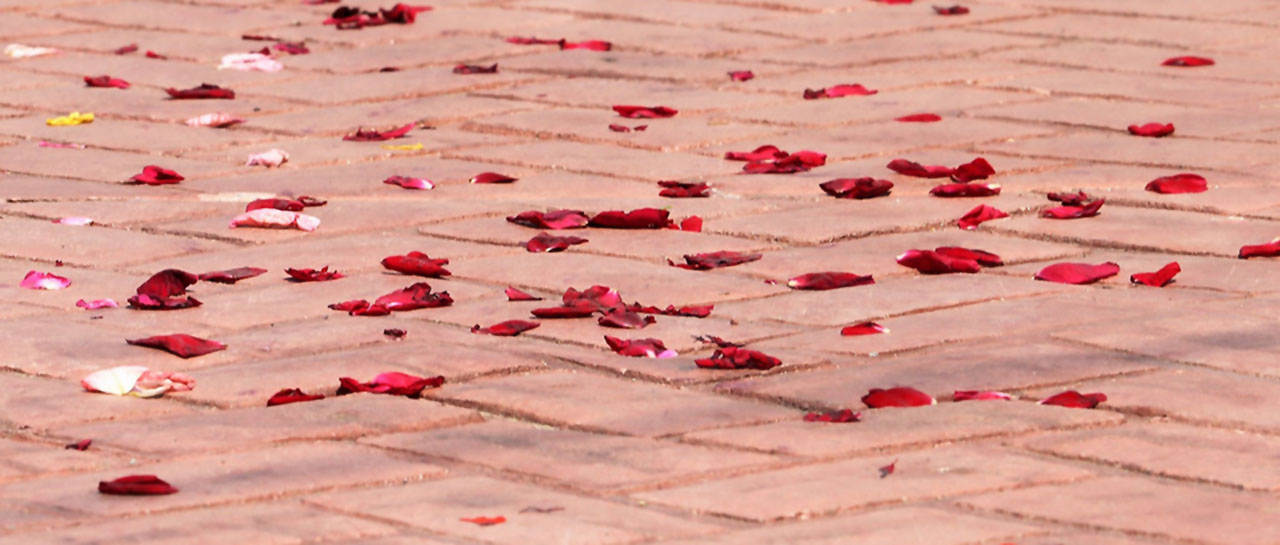
Corpus Christi is celebrated primarily in the Roman Catholic Church around the world and some Anglican churches in the UK. It is in commemoration of the Last Supper. Corpus Christi usually falls on the Thursday after Trinity Sunday although some churches may celebrate it on the Sunday after Trinity Sunday. But how is it celebrated around he world?
Devout Christians around the world receive Communion on this day
In some countries the consecrated bread (or host) is paraded throughout the streets. In Spain and Provence, France the processions are elaborate, featuring saints and characters from the Bible, following a path decorated with wreaths and flowers.
Arundel, in south-east England, has celebrated the feast of Corpus Christi for over a century and again the Blessed Sacrament procession starting along a carpet of petals adorning the Cathedral’s central aisle, through the streets to the town’s castle.
Many children will be confirmed into the church and take their first communion (also known as the Eucharist) on Corpus Christi. This is the practice of accepting consecrated bread and wine (or grape juice) which according to Christian faith are the body and blood of Jesus Christ’s.
The feast was introduced from Belgium to England at some stage between 1318 and 1325, according to various sources. In England before the Reformation, there was a famous procession in London on the day. A group of clergymen would move down the street chanting the paternoster, or the Lord’s Prayer. Over the years, they perfected their timing so that just as they reached a certain corner, they sang “Amen”. Although the feast of Corpus Christi is no longer observed as a public holiday in England, there was a time when the city guilds were involved in processions on this day and often performed what was known as “Corpus Christi” plays.
In Portugal the feast is known as Dia de Corpo de Deus and has been one of the major religious observances both on the mainland and in the Azores since medieval times. In the city of Ponta Delgada, in the Azores, the people make a flower-petal carpet almost three quarters of a mile in length. A procession of high-ranking clergy and red-robed priests who are followed by a group of first communicants (those who will receive communion for the first time), pass over this carpet. The climax of the ceremony comes when the bishop raises the silver monstrance and exposes the Blessed Sacrament, the “body of Christ”.
In Germany Corpus Christi is celebrated with colourful processions where the sacrament and other holy symbols are carried throughout the villages. Small-town streets are decorated with flowers and greenery. Children dressed in white wear wreaths of flowers and accompany women in regional costume and local clergy. Sometimes people display pictures of Jesus Christ and spread carpets in front of their houses to honour the day. Some processions, for example in the region of Bavaria, are held on lakes rather than on the streets, with flower-decked boats carrying members of the procession and worshippers across the waters.
In Switzerland this festival is usually observed with elaborate processions of clergy in their best robes, people in regional costumes, and soldiers in historic uniforms. The priest who leads the procession often walks on a carpet of flowers. In some areas it is customary to throw the church doors open and to decorate the altar and aisles with garlands and greens.
In Mexico religious processions are common on this day, as is the reposiar, a small shrine or altar set up along the procession’s path, covered with a lace trimmed altar cloth and decorated with candles, flowers and garlands. In some parts of Mexico Corpus Christi is observed with symbolic battles between the Moors and the Christians, particularly in the Sierras of Puebla and Veracruz. Another spectacle that takes place on this day is the Danza de los Voladores, or Flying Pole Dance. The dance involves five men, each representing the five elements of the indigenous world, on a tall pole. One of the men plays a musical instrument at the top of the pole while the remaining four descend the pole with a rope tied by one of their feet. The rope unwraps itself 13 times for each of the four flyers, symbolizing the 52 weeks of the year.
Corpus Christi is a public holiday in countries such as Austria, Bolivia, Brazil, Croatia, Dominican Republic, Poland, Portugal, and Trinidad and Tobago. It is not a federal holiday in countries, such as Australia, Canada, the United Kingdom and the United States.
My thanks for this information go to https://www.timeanddate.com/holidays/common/corpus-christi