


Lent is the period of six weeks (40 days not including Sundays) leading up to Easter, the most important festival in the Christian calendar. The Christian Festival of Lent comprising Shrove Tuesday, Ash Wednesday, Palm Sunday, Maundy Thursday, Good Friday and Easter Sunday is a 40 day period (not counting Sundays) of reflection and fasting commemorating Jesus Christs withdrawal into the desert for 40 days and 40 nights prior to his triumphal return to Jerusalem, his trial, Crucifixion and resurrection.
Lent and Easter follow a lunar calendar and is set on the first Sunday following the full Moon that occurs on or just after the spring equinox (21st March). This is why it changes each year.
Shrove Tuesday or Pancake Day
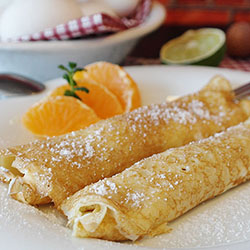 Shrove Tuesday is when traditionally Christians go to church to confess their sins and use up all the foods which are prohibited during Lent such as butter and milk. In Saxon times a bell would be rung to call people to confession where they were absolved of their sins ”shriven". This became known as the “Pancake Bell” and is still rung in some places today.
In the past Pancake races formed an important part of Shrove Tuesday celebrations. It was an opportunity for family, friends and neighbours, often in fancy dress, to race down the street tossing pancakes. This tradition has recently been re-introduced in places. but the Olney pancake race is not famous. Competitors must be local and cover their har with a hat or scarf as well as wear an apron.
Certainly I have never seen a race taking place but apparently they still do it in a number of places around the UK, especially at Olney in Buckinghamshire where apparently the tradition started in 1445 when a woman from Olney whilst making her pancakes, heard the shriven bell and rushed to church wearing her apron and carrying her pan. Now you have to toss your pancake as you run.
Many towns in England used to hold "Mob Football" games and this tradition dates back to 12 the century and this still takes place in Ashbourne in Derbyshire and Alenwick in Northumberland, Atherstone in Warwickshire. Even one called "hunting the silver ball" in Cornwall. (My thanks to Author Robin Myerscough for this info). There are also a number of different races taking place in the UK including Westminster Abbey and Scarborough.
A traditional British pancake (often called a Crepe in other parts of the world) is very thin and is served immediately. Sugar and lemon juice is the most popular topping for pancakes but in more modern times a variety of both sweet and savoury toppings are used. The pancake has been featured in cookery books as far back as 1439. The tradition of "tossing the pancake" (flipping them) to brown the other side is almost as old.
A traditional pancake recipe.
Pancake ingredients symbolise four points of significance at this time of year:
Eggs ~ Creation, Flour ~ The staff of life, Salt ~ Wholesomeness, Milk ~ Purity
To make 8 or so pancakes you will need 8oz plain flour, 2 large eggs, 1 pint milk, salt. Mix all together and whisk well. Leave to stand for 30 minutes. Heat a little oil in a frying pan, pour in enough batter to cover the base of the pan and let it cook until the base of the pancake has browned. Then shake the pan to loosen the pancake and toss it.
Ash Wednesday
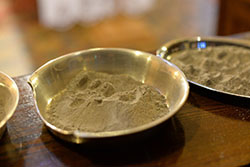 This marks the first day of Lent. For many Christians this signifies a time of self-reflection, abstinence and prayer to better appreciate resurrection of Christ at Easter. Although Ash Wednesday is generally said to have been named after the tradition of burning away old issues in preparation for Lent, because priests would put the sign of the cross on a penitents forehead by dipping their finger in the burnt ashes of last years’ palms from Palm Sunday. There was apparently another tradition of placing a stick of Ash down one's sock for good luck!
Palm Sunday
 Christians the world over celebrate Palm Sunday which is always held on the Sunday before Easter day. It marks the triumphal entry of Jesus into Jerusalem and the last seven days of his ministry, one week before His resurrection. Palm Sunday is the start of what is often called “Passion Week,” where Many people put on plays depicting the last week of the life of Jesus. It is believed that Passion plays first began in Germany in 1634. Palm Sunday was the “beginning of the end” of Jesus’ work on earth. It marks his triumphal entry into Jerusalem in a Donkey. See here for more information https://www.gotquestions.org/Palm-Sunday.html
Passion Plays
Passion Plays are biblical dramas that portray the Easter story. They depict the events of Jesus Christ's trial, death and resurrection and may also extend to the events of his life, works and miracles. They are usually held during this week prior to Easter Sunday.
Maundy Thursday
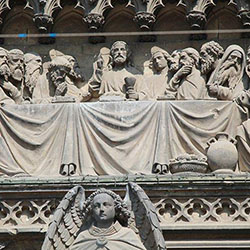 Always falls on the Thursday before Easter. It is sometimes known as Holy Thursday. It is part of the festivities of Holy Week and is one of Christianity's oldest celebrations, dating back to the first century Church. It celebrates the Last Supper that Jesus took with his disciples. But from where does the tradition of Maundy Money come?
The name "Maundy" comes from the Latin Dias Mandatum, which is the "day of the new commandment," which was that people should love one another, just as Christ loved them. Before that Last Supper Jesus washed his disciples’ feet as a demonstration of humility. This tradition is still practised today by the Pope and it has been practised by many religious and sectarian leaders, including monarchs, often in conjunction with the distribution of alms usually taking the form of food, cloth, and money.
The History of Maundy Thursday
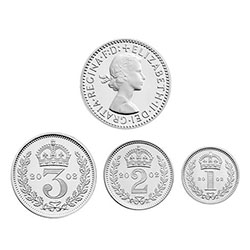 In the 12th century, the English Church initiated a custom of distributing money to elderly people who had performed outstanding service to the crown. Known as "Maundy Money," these specially minted coins are handed out in red and white ceremonial purses by the reigning King or Queen. Along with the giving of alms, Kings and Queens of England would also wash the feet of the poor as a way of humbling themselves. This tradition continued until the 17th century.
In Britain, the tradition of giving silver coins to the poor is believed to have originated in 597 AD with St. Augustine and has been performed by the monarch since the days of Edward II. Originally Kings gave money to men and Queens gave money to women, but at some stage this was extended to both sexes. It is believed that James II was the last British monarch to have personally washed the recipients feet personally. Originally in the days of Edward II only silver pennies would have been distributed, even though fourpences known as groats would have been available.
Modern Maundy Money is based on the denominations given for the first time in 1667. It consists of four coins, a penny, a twopence, a threepence, and a fourpence. The ceremony was originally performed at the Chapel Royal in Whitehall, but later moved to Westminster Abbey. Early in our current Queens reign, she decided the service should be held at a different venue every year, and not just in London.
Good Friday
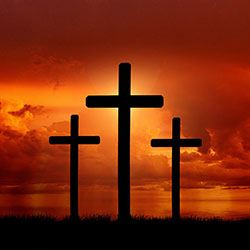 Commemorates the Crucifixion of Christ At Calvery. It is also known as Holy Friday, Great Friday, Black Friday. It is the day when Christians commemorate Jesus Christ's crucifixion. According to the Bible, the son of God was flogged, ordered to carry the cross on which he would be crucified and then put to death. It is probably called Good Friday because good used to mean holy and “That terrible Friday was called Good Friday because it led to the Resurrection of Jesus and his victory over death and sin and the celebration of Easter.
In many parts of the world, it is observed as a Bank Holiday. Years ago, when I was a child, all shops were closed except the bakers who would open for a few hours so people could by Hot Cross Buns and in those days it was the only day of the year you could buy them.
History of Hot Cross Buns
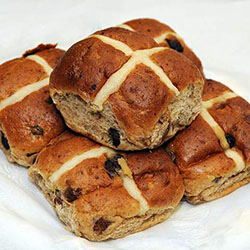 Hot Cross Buns are believed to have originated in the 12th Century when an Anglican monk baked sweet buns and marked them with a cross in honour of Good Friday. They became very popular. Over time many superstitions became connected to Hot Cross Buns. Some believed a bun baked on Good Friday would never go stale. It was widely believed that they carried medicinal or magical properties and people were fearful of those powers being abused.
In some countries, such as Germany it is illegal for people to dance or sing or hold horse races on Good Friday. In the UK it was not called ‘Good Friday’ until 4th Century and may be a corruption of God’s Friday.
It is part of the Easter Week celebrations and is usually around the same time as Jewish Passover.
Easter Sunday
This is the end of the Christian celebration of Easter Week which is a celebration of the resurrection of Jesus three days after his crucifixion.
Connection of Pagan Festivals
 Easter was not always a Christian festival. It was accepted by the Catholic Church at the Council of Nicaea in 325AD when Emperor Constantine wished to combine pagan and Christian festivals to create unity and peace within the Roman Empire.
Pagan celebrations are all associated with seasons and moon cycles; further corroborative evidence being the name Easter – derived from the Pagan God Eostre; the Easter Egg – reminiscent of the Pagan egg to symbolise fertility and the Easter Bunny – a variation on the Pagan Hare, another ancient symbol of fertility and with a 28 day gestation period very linked to the lunar cycle. In Ancient Egypt the hare is a hieroglyph meaning ‘existence’.
It is believed that when Emperor Constantine decreed that Christianity would be the Religion throughout the Roman Empire he set the dates of the main Christian celebrations in line with the most appropriate roman celebration thus it is also Magna Mater in the Roman calendar. This is the festival of, Phrygian Great Earth Mother Cybele. Her priests took on female clothes and identities to commemorate her son Attis, who was castrated and died of the wounds but was later resurrected. Around the world in ancient religions there are many stories about resurrection including Isis and Osiris and many others.